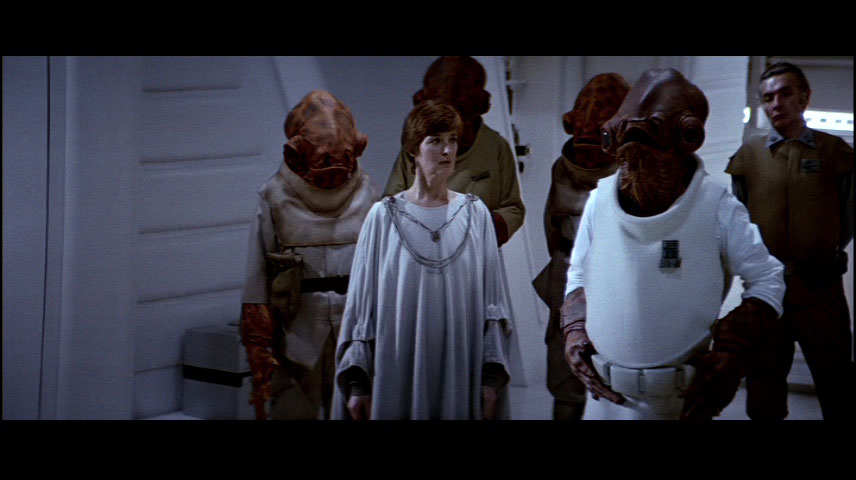
Hayao Miyazaki is one of my favorite filmmakers. He makes beautiful, rich animated Japanese children's movies, but I'd watch them even if I didn't have kids, they're so wonderful. One of my favorites of his films is Nausicaa, the story of a young princess who is a warrior, pilot, pacifist, environmentalist heroine. The futuristic world she lives in is one where a toxic jungle flourishes, and enormous insects roam the earth, and Nausicaa attempts to bring harmony between people and their surroundings while trying to prevent a war in her peaceful valley. It's one of my favorite movies of all time (and one of Evan's favorites too).
A few years ago I loaned our DVD to a friend of mine to share with her children, as an alternative to the standard princess movies made in the US. She returned it after a week or two, and told me she thought it was okay, but she thought the environmental messages felt like propaganda and that really bothered her. I always thought the messages were obvious but not over-the-top -- they fit in with the context of the story and the passion of the main character. I wouldn't call them propaganda at all. (Bear in mind that I'm a dirty tree-hugger, though.)
But it occurred to me today that that's how I feel about most mainstream children's movies: propaganda, of the gendered variety. Most kids' movies completely reinforce traditional gender roles, and the narrative of Boy Saves Girl and Boys Have Adventures and Girls Want Romance. And most people, I think, don't question this at all.
Example: My kids and I recently watched Madagascar 2. Not the worst kids' movie I've ever seen -- it was mostly entertaining, not too gross or inappropriate, not objectionable in most ways. Even funny at times, and I don't usually find kids' movies very funny. (Those penguins, though! And the chimps!)
Of the four main characters in the Madagascar movies, there are three males and one female (That ratio is my first problem). The three male characters' storylines involved 1) a zebra's quest for individuality, 2) a lion's quest to prove himself to his father, and 3) a giraffe's quest to become a witch doctor. The female character's storyline? Dating. That's it. It's true that in the end (spoilers!) the female hippo ends up with the male giraffe after he confesses his love and attempts to sacrifice himself to save the other animals, so there is a male with a romance storyline -- but the romance is only a part of his storyline, whereas with the female hippo, it's basically all she gets.
There are so many children's movies where the only female characters function as love interests for the males without really contributing anything of substance to the plot, and it really is starting to seem like propaganda to me. Cultural propaganda that serves to convince little girls (and boys) that girls are there for decoration, ornaments, instead of being actual people who can solve problems and rescue people.
Luckily in the age of the internet it's pretty easy to find films that don't conform to this mold, and there are the occasional big-studio children's films that don't either -- the Pixar movies are generally pretty good about gender, and the recent film Coraline was completely wonderful (as is the book it's based on). And we're currently watching on DVD a television series that's the best kids' media I've ever seen in terms of gender stereotypes and roles (which I'm planning to write about in its own post once we're through the whole series).
It's hard to avoid the propaganda altogether, but I feel like my eyes have been opened to a new way of contradicting those messages now that I've identified them as a form of propaganda.
23 April 2009
propaganda

23 March 2009
girl stuff
This morning Evan was, as usual, leafing through the Lego catalog, since he's apparently hoping to become some kind of human Lego encyclopedia. Usually his remarks are predictable: "Cool!" and "Look at this!" and "I want this one for my birthday!" Today, though, I overheard him exclaim, "Yuck! Girl stuff!"
I flipped through the catalog when he was finished, and I found that in the 65-page Lego catalog (which might be longer, actually, but ours battered copy is missing a few pages), two pages are drenched in pink with the proclamation "Just for Girls!" at the top of the page. This pink girly stuff? Horses, puppies, and a house with a family.
By singling out two pages that are "Just for Girls!", the implications are that 1) the "girl" toys are not for boys to play with and 2) the rest of the catalog is not for girls to play with. You may think that's too narrow an interpretation of the subtext, but take a lesson from my three-year-old son. This little boy, who's heard over and over in his young life that there are no "girl toys" and "boy toys", that anyone can play with anything no matter what gender they are, firmly told me that those two pages in the Lego catalog are "girl stuff" and "me and James will definitely never play with girl stuff!" And when I asked him if girls could play with the Star Wars Legos and Bionicles and Indiana Jones, he did not hesitate for a moment to tell me no. So even if that's not the message toy companies are intending to send, that's the message that's being absorbed by young minds.
A similar thing happened a couple of months ago when I took Evan shopping with me for a birthday present for my nephew. We wandered the toy aisles, looking for something good, trying to remember what 1-year-olds play with, when we turned a corner and were visually accosted with a sea of pink and glitter. "No way!" Evan cried. "These are the girl toys!" Girl toys, such as kitchens and horses and dress up clothes.
And, to digress for a moment, what is it with horses being designated as girly? First of all, horses are most often associated with cowboys, who are usually not only men, but like the total masculine ideal, all macho and rugged. And then there's the reality that riding horses and caring for horses is really dirty work, which is typically the exact opposite of what society encourages little girls to do! I've always found that really odd.
Anyway, this is not a new phenomenon by any means -- toys have always been gendered, in some ways -- but it's new to me, trying to teach my sons how to interpret and navigate all of this division. My instinct is to say that there shouldn't even be any division in the first place -- I mean, the Supreme Court decided decades ago that "separate but equal" is never equal. But focusing on the ideal doesn't address the problem that exists in reality.
So I keep on trying. I tell my sons again and again that they can play with anything they want to play with, they can like anything they want to like, that their choices are not limited by manufacturers' colors, and neither should girls' choices be limited that way. I do think they understand that, and believe it -- after all, they play with their toy kitchen all the time, they like to have their nails painted, they play nearly every day with Neighbor Girl, with whom they play everything from Star Wars to hopscotch to soccer to, yes, horses. I do think they both get it.
But there is still something disheartening about hearing your preschool cry, with as much disdain as a three-year-old's voice can carry, "Yuck! Girl stuff!" It's just another reminder that no matter how attentive a parent you are, no matter how progressive or idealistic you are, there is still a whole culture out there that is insidiously trying to undermine every effort you make that falls outside the mainstream.
18 March 2009
an open letter to a fellow mother
Dear K's Mother,
It's so nice that our sons have befriended each other at the preschool play class, and I'm glad to have someone to talk to about our children, the town we live in, and other mundane small-talk sorts of things.
But what I don't enjoy is your sporadic gender commentary on our kids. I find it odd that you proclaim Evan and your son, K, to be "all boy" as they are tumbling and climbing and jumping on the mats, when our friend's daughter, A, is right alongside them. I find it puzzling that you marvel at how "dainty" A is: "She even walks differently than the boys!" And when A's mother explains that A's style of walking is something she's had physical therapy to try to correct, and you recall that actually, your oldest son walked that way for a while as a toddler but grew out of it, you still have no problem finding another way to differentiate the sexes, zeroing in on the one moment when A lies down on a mat and pretends to go to sleep, cooing that "the princess is sleeping!" Oh, those boys are wild, but the little girl, she is a calm and docile princess. In this minute and this minute only, but that's apparently enough evidence for you.
I find it strange, too, that you and N's mom exchanged laughter over how rowdy Evan, K, and N were being, "such boys!", with their jumping and tumbling, commenting that all of the little girls were staying far away from the mats where our sons were being so rambunctious. It seemed that you two had forgotten the previous half hour in which little girls were climbing right there on the same mats with our boys, and you must not have noticed in the next half hour when girls were again playing with the boys.
I wonder if you would still call Evan "all boy" if you saw the way he likes to snuggle up to me, sucking his thumb? I wonder if you'd hold fast to your notions of how different boys and girls are if you saw my son's bright red toenails? I wonder if you've ever considered that part of the reason boys and girls do behave differently might be because people like you label little girls "princesses" simply for existing? I wonder if your head would have exploded had you known Evan during the phase where he liked to pretend to be Princess Leia?
K's mom, you seem like a pretty nice woman. Maybe if you can stop your gender editorializing, or if I can learn to ignore it, we could be friends. I'm not sure how likely either of those options are, though. It's too bad, because I could use a friend who understands what it's like to raise boys surrounded by so many hyper-masculine cultural stereotypes.
Hugs,
Evan's mom
10 April 2008
not about food
Okay, enough of the food blogging. The more I write about food, the fewer comments I get. I can take a hint.
Instead, today, I'm going to post on a couple of other topics I love: movies, and gender issues. (Not that I think these topics will get many more comments, but at least it's a change of pace!)
I want to direct you to this piece by NPR's Peter Sagal, which has been all over the feminist blogs I read, about the blatant sexism in the new Dr. Seuss movie, Horton Hears a Who. It's pretty short; read it if you haven't already. I've written before about gender distribution in sci-fi and fantasy, and in that post I mentioned, without getting into details and examples, that it's part of a larger trend in film in our culture. But Horton apparently takes the cake, with one heroic boy and his ninety-six useless sisters. Trust me, they didn't get that from Seuss's book.
It felt great to read Sagal's indignant rant about the worth of daughters. The lack of female characters in kids' movies (and adult movies too, though I'll save that rant for another day), not just of female heroes or protagonists but of female characters in general, is something that has irritated me for a long time. Television is generally better -- thank goodness for PBS! -- but part of the reason for that is that there are so many kids' shows to choose from (even when you only get five channels) while there are, what, 3 or 4 mainstream kids' movies in theaters every year? Maybe five in a good year. Slim pickings, at any rate.
At the end of his piece, Sagal mentions several iconic kids' movies featuring male protagonists saving the day, or saving the world. Below the fold I'm going to highlight some of my favorite kids' movies (favorites of my boys, too, I should add) that give girls a chance to shine.
At the very top of my list is every film ever made by Hayao Miyazaki. From the magical adventures of Satsuki and Mei in My Neighbor Totoro, to the compassionate yet fierce ace pilot and princess Nausicaa, to the smart, resourceful Sophie taking charge in Howl's Moving Castle, to the slightly-feral warrior Princess Mononoke, Miyazaki's films are full of girls who run the show and save the day. Totoro was a favorite of my boys' when they were small, and Nausicaa is a long-time favorite of both as well.
One of my favorite movies even now is Mary Poppins, and both of my boys fell in love with it too when we first watched it a couple of months ago. Two adorable children go on adventures with a magical nanny who takes no nonsense from anyone. Plus there are fun and catchy songs to sing along to. Bonus: the children's mother is a suffragette! (Something I had forgotten in the many years between watching this movie as a child and as an adult.)
I've been working on this post for a while, and the last film I can think of with good gender distribution (and a good plot too) is The Incredibles, the only Pixar film I can think of that has more than two female characters. (Did you see Ratatouille? Cute film, but am I the only one who noticed that in the colony of hundreds of rats, there was not a single female rat among them? Please!) As someone who likes superhero movies in general, and as the mother of boys who love superheroes, I have to say that I would really love to see more movies about female superheroes, and The Incredibles helps fulfill that wish a little bit for me. It's not only a fun film, but one that places its women on equal footing with its men, and in which everyone works together to save the day. My kind of film.
So there you have my favorite kids' films, for girls and boys. I don't think it's a coincidence that my favorite kids' films also have even gender distribution (well, more even than most films anyway) and/or strong female characters who are not stereotyped. (Okay, a proper British nanny is obviously a stereotype, but Mary Poppins goes so far above and beyond typical child-rearing that I think she's an exception here.) Maybe one of these days I'll have time to get into other kids' films that are good, but could have been better if their vast casts had included, say, one woman to every 3 men instead of one woman to every 10 men.
06 November 2007
feminism is still necessary
Yesterday a friend I haven't seen in several months came over to visit. She has a son who James is good friends with, so the boys played, giving us a chance to catch up. It didn't take long for her to tell me that she and her husband are getting a divorce.
Mostly she's fine with the way things are working out, but she confessed that she's worried about going back to work. She was a nurse before her son was born, but she's been a stay-at-home mom for almost six years now. She's worried about how much the field has changed in six years; she's worried about whether anyone will want to hire someone with a six-year gap in her resume. In short, she's fine with the fact that her relationship is ending, but she's worried about the money.
She's gone from living in a spacious 4-bedroom house in one of the wealthiest suburbs around to living in a loft apartment in a terrible neighborhood downtown. Her husband is wealthy, with the potential to earn even more money in the years to come. Together over the last 7 or so years they've enjoyed a high quality of life. Now that they're getting divorced, her husband will be able to continue his way of life virtually unchanged. My friend, however, for all her years invested in raising their son and running their home, cooking their meals and managing their everyday life, is suddenly reduced to a fraction of her former quality of life.
This is not uncommon.
On my sister's recommendation, a couple of years ago I read Ann Crittenden's The Price of Motherhood. Every mother should read this book. Every parent should read this book. To be brief, it examines the value that American society really places on mothers* -- the economic value, that is. Cultural wisdom tells us that being a mother is one of the most important things a woman can do, if not the most important. The cultural ideal is that every moths should stay home with her children and devote herself to raising them.
The practical reality, though, is that women who choose to stay home with their children are making a huge economic sacrifice. They are losing income, obviously, by not working, but they are also losing future income, should they return to work someday, by putting a sizeable gap in their resumes. They are also forfeiting benefits such as health care, social security and retirement savings -- some are lucky enough that their husbands' benefits will include them, but certainly not everyone has that option, at least not at an affordable price. It's no wonder, then, that divorce is a worse experience for women, financially, than for men. Women usually retain custody of the children, but even with child support, they usually face a significant drop in income on which to raise those children. Sadly, my friend is finding this out the hard way. She did not hesitate to remind me that I'd face the same situation should Greg and I split up, something I've definitely thought about.
So what's the solution? Well, I think cultural recognition that parenthood is real, valuable work would be a start. Universal health care would help. It'd be nice if more businesses would offer flexible schedules and benefits for part-time workers. Maybe government inclusion of unpaid caregivers' jobs in social security. Crittenden's book -- seriously, I can't recommend it enough -- addresses all of this, with real-life examples of how other western nations deal with the same issues. There aren't any easy solutions, especially since people's circumstances vary so much. But I think more women, especially those who stay home to raise children, ought to be aware of the real consequences of that decision.
*Of course this would apply to stay-at-home fathers as well, but mothers make up the vast majority of stay-at-home parents, so I'm generalizing.
27 September 2007
does gender distibution matter?
This is something I've wanted to write about for a while, but never got around to. But this morning Greg and I were having a conversation about the sci-fi and fantasy genres, and I remarked that the lack of female characters in the genre makes it less welcoming to women. And Greg ... doesn't see that. I have a hard time articulating this sort of thing, but I'm going to give it a try.
I was telling him about James dictating a Star Wars game for himself, me, Evan, Neighbor Girl and Neighbor Girl's mother. James was Anakin Skywalker, Evan was Luke Skywalker, Neighbor Girl was Princess Leia, Neighbor Girl's mother was Padme Amidala, and I was Shmi. (Do you know who that is? Anakin's mother.) I realized as he was assigning parts that he'd gone through almost every female Star Wars character I know. (I can think of one other -- Mon Mothma -- but if you haven't spent hours reading through Star Wars books with your obsessive sons, you probably don't know who she is, because she doesn't play a very important role and is never mentioned by name as far as I know.)
I'm talking strictly movies here -- which is what the general population is familiar with -- even though I'm vaguely aware that Star Wars books and games introduce a lot of other female characters. The movies have, essentially, three important female characters (and calling Shmi important is kind of a stretch). For Neighbor Girl to play a cool Star Wars woman, she can be Leia or Padme. But my boys? They can be Luke, Anakin, Han Solo, Chewbacca, Obi Wan, Darth Vader, the Emperor, Mace Windu, Yoda, Qui-Gon Jinn, Boba Fett, Lando... and that's just off the top of my head.
The same goes for Lord of the Rings, the other big fantasy series of recent years. Obviously you can find fantasy with female lead characters if you're looking for it (Philip Pullman's His Dark Materials trilogy comes to mind) but the works in that genre -- both in movies and books -- which become popular in the larger culture, which trancsend the genre to become universally well-known, are dominated by male characters.
Greg (along with a lot of other people) doesn't think that's a big deal. He pointed out the important role Eowyn played in Lord of the Rings as an example -- but she's still a bit player who just happens to perform a crucial role. And she's one of three notable women in the entire series. And the thing that it's hard to get across to a man, who has grown up watching men dominate society, in both the real world and fiction, is that this disparity matters. The numbers matter. The stereotypes matter. The lack of representation matters. It matters to see a world not populated by people like you. If little girls can't find role models in a genre, it will not appeal to them as much as a genre that does have those role models.
I could probably go on and on about this (and I probably will return to this topic again), but luckily for you I've got other demands on my time. But I do have one item to leave you with before I wrap up this post. Actress Geena Davis has founded an organization called See Jane, which aims to promote the need for equal gender representation in kids' entertainment. You can watch Geena give a phenomenal speech here (sorry, couldn't get the embedding to work), or if you don't have 20 minutes to watch the video (though I'd really recommend that you do, if you have the time), you can read a short article at Ms. Magazine about her ogranization. Their research came up with some surprising statistics about gender distribution in kids' media, and I think you'll find, if you start keeping count, the same imbalance often holds true for adult entertainment as well (unless you're watching something specifically designated as a chick flick or something similar).
As Davis says in the Ms. article, “If your movie gets labeled a chick flick it’s the kiss of death. What if that has something to do with having seen the exact same gender disparity from minute one, from the very first cartoons and programs you see — couldn’t that possibly affect the way we grow up feeling?” I'd go a step further and say, how can it possibly not affect the way our culture views gender? How can it not affect the way little girls see themselves, or the way boys see girls, to see boys at the center of every story, and girls in the supporting roles? The message sinks in so gradually and so insidiouly that most people don't realize it, and eventually don't even think it matters that much.
22 August 2007
maybe my kids are hermaphrodites
I found out today that there is scientific proof that women like pink and men like blue. Apparently the most obvious explanation for these preferences is evolution! Biology! And it has nothing to do whatsoever with the way people are socialized from birth. Obviously, people buy pink things for girls and blue things for boys because we understand on a genetic level that these are the correct, biologically-determined color choices. It's nonsense to believe that the cultural association of a specific color to each gender might influence the preferences of people raised in that culture. I mean, it's not like color associations have ever been different. Men hate pink, and always have.
I think it's interesting to note that girls like pink and blue, but boys only like blue. The article, however, doesn't say anything about green or orange, which are the favorite colors of the male people in my house. I guess we can say that green is closer to blue, and orange is closer to red, which is close to pink, so one of my sons may actually be a daughter, if we're using this scientifically proven, biological indicator. I'll have to check on that and get back to you.
16 April 2007
a few minutes of fame in the blogosphere
There's a good handful of people who've been reading my blog for a while. If you're one of those regular readers, you must know all about the ways in which I'm psychologically damaging my sons. You must be aware that I really want daughters. Certainly you'd agree that I'm sort of "loco", possibly "delusional", and probably a little "off". It must be obvious, because some of these guys managed to draw those conclusions from reading only one of my posts!
I'm fairly amused. This is the first time, to my knowledge, that I've been linked anywhere, and it's by someone who thinks I'm crazy because once, I painted my son's nails when he asked me to; because I did not forbid him from trying on a pair of my heels when he expressed curiosity; because I entertained the idea of buying him a skirt when he asked me to.
I'm actually quite pleased at the number of people on that forum who can recognize that I love my sons, and that I'm not willing to limit their self-expression based on some arbitrarily gendered cultural guildelines for appearance. One of them also pointed out that Jesus & Co. had "a certain propensity for long skirts", to which I say, right on! If it was good enough for the savior of mankind, it's good enough for my kids!
As to the allegation that I want or need a daughter: I have been known to say that the main reason I'm sad about not having any daughters is because of the adorable, ridiculously froufrou clothes. I guess it says something incredible about my self-restraint that I do not, in fact, force my sons to wear that sort of clothing. It helps that I have a niece for whom I can buy such things if I really can't resist. Or, you know, what with me being a woman and all, I could wear them myself. But other than clothes, I don't have any reason to desire a hypothetical daughter over the wonderful sons I actually have.
So it wasn't my influence (my example, perhaps, but not my suggestion) that led to James' nails being painted. Believe it or not, my son did ask, entirely un-coerced, to wear nail polish and a skirt. He tried on my heels because they were lying out on the floor, not because I bribed him with a Gameboy. In fact, a couple of months ago, he saw a grandfather and granddaughter at the library and said, "I want my hair to look like that." I thought he meant the grandfather ("What? Why do you want gray hair?") but he actually meant the little girl's long golden braid. So we started growing his hair. And I will admit that James' ponytail was my idea -- it was my suggestion for keeping the hair out of his face all the time, and he liked my bubble-gum hair ties. But the inconvenience of growing his hair long eventually made him decide to cut his hair a few weeks ago. I was glad, though, that his decision was practical rather than gendered.
By the way, James does not own a skirt. I looked briefly last summer for something kilt-ish, but couldn't find anything I liked, and it hasn't really come up since then. Although, this morning when I went in to pick him up from preschool, he was wearing a flowered dress out of the dress-up room. So I guess it's too late for James -- the psychological damage has been done. We'll have to count on Evan to be the manly man -- but wait! Evan likes to play with dolls!! God, what have I done to these children?!
Greg looked around on the forum for a little while last night, trying to figure out who these guys were and how they'd found my site. (Believe it or not, my gender-bending post is the most frequently visited page on my blog. A lot of people reach it by Googling things like "paint his nails" or "under his skirt". I don't understand it, but I hope I can be of service.) He pointed out to me that a lot of the guys on that site are into comics. I'm a fan of certain comics, and movies made from them, but I was not above pointing out the irony of guys who like to read about guys who wear tights finding fault with a little boy's experimentation with his wardrobe and appearance.
26 January 2007
the boy makes me proud
James' friend E. is over to play. This is good for everyone because James and E. are both obsessed with Star Wars, they (mostly) tolerate Evan tagging along, and I am thus able to do a lot of things I might otherwise not have time for. (Like Boggle online!)
Scene: James and E. are (duh) playing Star Wars. James' version of Star Wars is based on the Star Wars Legos video game, which he tries to re-enact as closely as possible.
James: Do you want to be the pilot or Queen Amidala?
E.: (pause) Are you crazy?!?!?!? Queen Amidala?!?!?!
James: Yeah, do you want to be Queen Amidala or the pilot?
E.: Amidala is a girl!
James: Okay, if you want to be a boy, you can be the pilot, who is not a girl.
E.: Okay.
James: And I will be Queen Amidala.
E. is an almost-6-year-old boy, he is in kindergarten, he has an older sister, and his parents are traditional conservative Christians. These are the things that I can think of that might contribute to E's disgust at the idea of pretending to be a girl. Whatever causes it, I'm glad James doesn't have the same attitude. Star Wars has very few women, true, but the women in Star Wars are for the most part pretty capable. Not as heroic as the men, of course, but they're cool enough for my son to pretend to be them, and that's something.
22 January 2007
why i'm pro-choice
Today is Blog for Choice Day* here on teh Internets. I wasn't going to post about it, because I write a tiny blog read only by a handful of my family and friends, so what would it matter? But women's reproductive health is an important issue to me, and after reading many blog posts on the subject today, I feel compelled to write about it.
Why am I pro-choice? I was pretty adamantly pro-life from the time I became aware of the issue until I became pregnant at the age of 19. When I found out I was pregnant, I was between my sophomore and junior years of college, my on-again, off-again boyfriend and I were off again, I was preparing to study abroad in Milan, Italy in the fall, I had no money, and I had plans for the future that didn't involve an unexpected pregnancy.
I went through a lot of agonizing and soul-searching about what to do, and I very seriously considered abortion -- seriously enough to get a list of abortion providers and phone numbers to call to schedule a procedure -- but eventually Greg and I decided to have a baby. It wasn't an easy choice to make, but I wasn't aware until I was faced with the decision how difficult it would have been to choose abortion. Like many pro-lifers, I assumed women who aborted were irresponsible sluts who took the easy way out. Only when I was in a position to consider abortion did I realize how ignorant I was.
What really turned me from being pro-life to pro-choice was that decision-making process. If I hadn't had the chance to choose for myself what was right for me, for Greg, for our lives and circumstances, how might things have been different? How would I have felt had I had no choice? Would I have resented my baby if I were forced to have him, instead of choosing him? I think it's incredibly important that I was able to choose my son, and because I was able to choose him, I understood how important it must be for other women to make a choice for themselves as well. I chose to have a baby, but I can no longer judge a woman who makes a different choice.
I became pro-choice because I learned first-hand how important it is to be able to make such an enormous decision about your own life. I've become more and more strongly pro-choice over the years as I learned first-hand what pregnancy, childbirth and motherhood are like, as I've learned more about what life is like for women who aren't allowed to choose, as I've learned more about the dangers of illegal abortions, as I've learned more about how much better off women and children are when children are wanted and planned for, as I've learned more about the realities of women's lives that don't fit neatly into the black and white pro-life mentality.
Recommended posts by women who are far more eloquent than I: Jill at Feministe has an amazingly comprehensive post listing dozens of reasons to be pro-choice, and an old post from Bitch, Ph.D. asks whether or not you trust women to make decisions for themselves.
Share your pro-choice stories or links in comments!
*Edit -- Forgot to add that today is Blog for Choice Day because it is also the 34th anniversary of Roe v. Wade. Hooray!

18 December 2006
on modesty and responsibility
Okay, so blogging is obviously the last thing I should be doing right now, but I do need the occasional break from laundry and errands and packing. And I've actually got a real post in mind today! It's something that I've come across repeatedly lately, and something to which I've already admitted being somewhat shallow about, but it's provoked a conflict between my maternal side and my feminist side, which usually manage to co-exist quite nicely, but once in a while I run into a hurdle.
One of the biggest reasons I've always been a little bit sad about having only boys is the clothes. Sure, I have an adorable neice who I can buy clothing for, but I hardly see her, so it's not quite the same. Boys' clothes are all dinosaurs and rocketships and vehicles and sports, which gets pretty old pretty quickly. But girls have skirts and dresses and lots of colors and styles and accessories! (Like I said, shallow. I should probably just get a doll.)
But for a while, I've been noticing a trend in girls' clothing. Styles that used to be marketed only to adult women have started being marketed to teenagers, and now pre-teens and younger. It's always been the case, I think, that little boys' clothes are imitations of men's clothing, and now girls' clothes are starting to imitate women's clothing. The difference, though, is that there's an element of sexuality in women's clothing that doesn't exist in men's clothing, and that sexuality is beginning to trickle down to younger and younger girls. There is something that really makes me uncomfortable about seeing young girls in halter tops and miniskirts and teeny bikinis, about seeing thongs and tiny bras in the girls' department in a clothing store. It's not that I think girls shouldn't be comfortable or wear whatever they want to, but I think that the sexualization and objectification that is imposed on adult women by American culture shouldn't be pushed onto young, pre-sexual girls.
I've been browsing some parenting blogs lately, and recently came across the Moms for Modesty statement. I agree with a lot of what they say: encouraging modesty and refraining from sexualizing girls, teaching girls to value inner beauty, supporting retailers who sell age-appropriate clothing. But one part of their statement really caught my attention: "I believe that it is unwise and unfair to taunt boys and young men by permitting my daughter(s) to dress in an immodest manner. "
As a mother of boys, I have a real problem with this statement. Sure, I believe in keeping girls' clothing girlish, but not because I believe that girls have any kind of duty to protect boys from being "taunted". Something I firmly believe, and which I've already begun to teach James, is that you cannot control or change the behavior of anyone else; all that you can do is control your own reactions to the behavior of others. I believe it's unwise and unfair to assume that all boys will react the same way to seeing a girl dressed "immodestly", and I also think it's unwise and unfair to expect girls to have to predict and prevent the emotional and hormonal reactions of boys. I think it would be far more effective to encourage boys to control themselves no matter what a girl is wearing.
This attitude is something I've seen before, primarily from right-wingers and particularly from religious types. It's this idea that men and boys are somehow unable to control themselves in the face of hormones, and so it's the job of women and girls to lead them not into temptation. It reminds me of a conversation I had with a former neighbor of mine, which makes me cringe every time I recall it.
We were talking about this very issue: modest clothing for girls, and particularly teenage girls. She was in favor of modest clothing, not, apparently because of any benefit it might have for the girls involved, or even because of her religious views. No, her husband had told her that men are so visually stimulated, much moreso than women, that to see a young girl in a midriff-baring top drew his attention not only to the exposed skin, but to the suggestion of skin covered as well. In my neighbor's words, seeing a teenage girl in revealing clothing at the mall turned her husband's thoughts to that young girl's vagina. She believed that girls should dress modestly to prevent the visual temptation of men.
I was pretty appalled, and practically ran home to ask Greg whether that was really a universal male quality, as my neighbor's husband claimed, and Greg was as weirded out as I was. Either Greg is a very convincing liar, or my neighbor had managed to convince his wife that his disturbing reactions were not only not disturbing, but normal and typical. And perhaps he really does believe that all men are like him. But my experience tells me that this is not true.
So as a mother, as someone who thinks children are exposed too soon to the ugly things in this world, I would like to see young girls dressing more girlishly. The rampant sexuality of American pop culture is creeping into younger and younger minds, and I'm really uncomfortable with that. Women are objectified at young enough ages already; we don't need to lower the bar. But as a feminist mother of boys, I believe that women and girls are deserving of respect no matter what they're wearing. To focus on and disparage the clothing choices of a person is to show disrespect for that person. I want my sons to be able to look at a girl in low-rider jeans with exposed thong and see her not as a walking vagina, but as a person. Above all I want my sons to understand that they are responsible for their actions. If a scantily-clad girl turns their heads and inspires lustful thoughts, she is not responsible for the emotions her appearance has invoked in them. My sons are the only people responsible for the thoughts that run through their heads, and how they express those thoughts.
To expect a girl to alter her appearance in anticipation of the reactions of boys is like expecting a restaurant to eliminate desserts from its menu for fear of exciting the gluttons. It's an unfair burden to place on girls, and it excuses boys from taking responsibility for themselves. If I were a man, I think I'd be a little insulted at the implication that I am unable to control myself in the face of temptation. So let's give men and boys some credit here -- human beings, regardless of gender, are capable of controlling themselves. The idea that they're not is harmful to both girls and boys.
27 July 2006
essential nutrition vs the comfort of bystanders
Via Feministe, I came across this article about readers' reactions to the image of a breastfeeding infant on the cover of a parenting magazine. The ironic headline? "Why Women Don't Nurse Longer." Well, perhaps the common perceptions of a nursing breast being gross, inappropriate, or sexual -- all adjectives used by readers complaining to the magazine -- have a little something to do with it.
Okay, before I attack this article, let me start by saying that I am about as pro-breastfeeding as you can get. I think that many women make stupid excuses for not breastfeeding, because in a lot of ways it's easier not to; I think that despite our government's stated support of breastfeeding, it does very little in the way of actually supporting it by making it easier for women to breastfeed for the recommended amount of time; I think workplaces need to be restructured -- in many ways actually, but for the purposes of this discussion, to guarantee women maternity leave for those crucial early months when breastfeeding is established, and to allow women to continue to pump breastmilk in privacy and comfort once they return to work; I think our hyper-sexualized culture gives the sexual function of breasts far too much attention, when it is the far more important nutritional function of breasts that should be emphasized, if we are serious about being a nation committed to family values.
But apparently, people are only interested in promoting family values when it doesn't conflict with their personal comfort level. Quotes from the article:
- One mother who didn't like the cover explains she was concerned about her 13-year-old son seeing it. "I shredded it," said Gayle Ash, of Belton, Texas, in a telephone interview. "A breast is a breast — it's a sexual thing. He didn't need to see that."
- "I'm totally supportive of it — I just don't like the flashing," she says. "I don't want my son or husband to accidentally see a breast they didn't want to see."
- Another mother, Kelly Wheatley, wrote Babytalk to applaud the cover, precisely because, she says, it helps educate people that breasts are more than sex objects. And yet Wheatley, 40, who's still nursing her 3-year-old daughter, rarely breast-feeds in public, partly because it's more comfortable in the car, and partly because her husband is uncomfortable with other men seeing her breast.
- "In a survey published in 2004 by the American Dietetic Association, less than half — 43 percent — of 3,719 respondents said women should have the right to breast-feed in public places."
Listen -- anyone who's ever been around a baby knows that babies need to eat. Because when they don't eat, babies scream and cry until they are fed. And seriously, when you're out at a restaurant, what will annoy you more about the family sitting next to you -- a mother discreetly nursing her baby, or the baby screaming and crying because it needs to be fed and its mother feels social pressure not to nurse in public? And please, please, don't bring up the bathroom alternative. Because I have nursed a baby in a public restroom, once and never again, because it was disgusting and really uncomfortable. Think how many public bathrooms you're squeamish about even peeing in -- ladies, how many times have you hovered above the seat for fear of germs and disease? -- and now imagine trying to enjoy a meal in that locale. No way.
No, the only real alternative to breastfeeding in public is to breastfeed at home, to refrain from going out in public if there's a chance your baby will need to eat while you're out -- which is essentially the first six months of a baby's life, or until they start on solids. And that seems to be the attitude of some of the people quoted in the article: you may nurse, as long as no one has to look at it. Which is ridiculous. If we, as a society, agree that breastfeeding is the healthiest way to feed a baby, and if we, as a society, agree that women have the right to frequent public places without restriction, then by logical extension we, as a society, should support the rights of women to provide their babies with the healthiest food possible in any place where it's legal for that woman to be. We should be actively encouraging it! Saying that breast is best without taking action to back up that assertion is hypocritical at best, and harmful to mothers and babies at worst.
You know, I feel so strongly about breastfeeding and the right to nurse in public that I've always wanted someone to challenge me while nursing in public so that I could give them an earful. Unfortunately, I've never had the chance. Maybe I've always been surrounded by tolerant people, maybe I've always been oblivious to dirty looks or whispered comments. I did have the mother of a friend of ours ask me, while pregnant with James, if I was planning to breastfeed, and when I said yes, she replied, "Gross!" Seeing as I hadn't had the baby yet, and had never breastfed, I didn't know quite how to respond. I was offended at her rudeness, but didn't think much about her negative attitude, because at that point the negativity toward breastfeeding was something I had yet to encounter. Little did I know how typical her attitude was.
I'll end with my favorite public breastfeeding experience. Last summer, we were at the state fair, and when my then-two-month-old baby needed to nurse, I found an empty bench in the building we were in and nursed him. An older woman nearby noticed me and said "Good for you!" She told me that a few minutes earlier, she'd seen an anxious mother wandering around with a crying baby, looking for a private place to nurse. We both laughed about what a silly expectation that was at a place like the state fair. THe older woman looked around and said, "Besides, we're in the dairy building. What better place could there be?"
26 July 2006
the name game
With all the weddings I've gone to this summer, I've noticed something interesting. Even the most independent, liberal women I know change their last names when I get married. I know it's a long-standing tradition, but it makes me wonder how often anyone thinks about why women change their names, or if they do so because that's just the way it's done.
I find it interesting, too, that the only women I can think of who have not changed their last names after marriage are members of my family: my sister, my cousin, my aunt. (Am I missing anyone?) If I ever marry, I won't change my name. I've had my name for almost 25 years; having an unusual last name is something of a defining characteristic when you're growing up, and so I have some attachment to it. But beyond that, in recent years I've started considering the patriarchal origins of name-changing, and I'm uncomfortable with following a tradition that has its roots in what was essentially property ownership. The male is the default; children are named with their fathers' names to assert his paternity, and women are renamed with their husbands' names to signify the transfer of property from father to husband.
I know this is not the typical mindset nowadays; most married couples don't believe that one of them owns the other. Most people don't worry about the symbolic implications of name-changing. But I think it's useful to examine where our traditions come from and why we continue to follow them.
When I had James, we gave him Greg's last name because we planned on getting married at some point, and I thought I'd change my name at that point so that we'd all have the same last name as a family. But now that I"ve changed my mind about name-changing, and possibly marriage at all, I regret just a little bit not giving my boys my last name even as a middle name. Greg and I have talked about changing all of our last names to be the same, but my last name is too long for hyphenation, and our last names don't merge well into a new name. Maybe if we ever think of something appropriate for our family, we'll change our names, but until then we're going to live with different last names. This actually has never been an issue -- it's more of a problem for people that we're not married at all -- so it doesn't bother me much to keep it this way, though I do like the idea of identifying our family with a common last name.
But I feel that I'm something of an oddity for thinking so deeply about it. Most women change their names without stressing over it. Has the naming tradition evolved over the years along with the purpose of marriage and the roles of the spouses? Or is our culture holding on to a remnant of a more oppressive time simply because there's been no reason to change? I'm interested to hear others' thoughts on this; particularly if this is something you find worthy of consideration; if you think I'm making too much out of it; if you've had similar thoughts; if you think the typical woman considers this issue. Thoughts?
**Edit: I should clarify (because I wrote this really hastily earlier) that just because I find the origins of the name-changing tradition distasteful doesn't mean that I'm criticizing anyone who does choose to change her name. I realize that many people probably don't find the origins relevant today, and that people have their own reasons for changing their names. I think people should do whatever they want to do -- but I like to ask why we do what we do, as individuals, as human beings, as a society.
13 July 2006
it is far too early to be discussing my son's sexual orientation
I had an interesting anonymous comment on my gender-bending post that I thought I'd address in an entirely new post. Anonymous says:
Not many women would be attracted to a man who wears "dingdongs" in his ponytail on tht top of his head, while wearing red nail polish on his fingers...and toes that are sticking out from under his skirt.
Your post regarding your son may be proof to what many say that being gay is not a choice. It is thought that people are gay at birth, no choice. Reading your post, I have to wonder if it will be his, or yours.
I've got a few things to say in response, in no particular order:
- The implication that a desire to wear a ponytail or nailpolish or a skirt is equivalent to being gay is a little odd. I've known boys and girls of both sexual orientations who have worn all of those, or none. Appearance is not a reliable indicator of sexual orientation.
- My son is four years old. Four-year-olds of both genders like to play dress-up, and to emulate their parents. Do you still look the way you did at age four? To assume that because he likes nail polish now means that he will do so throughout his adult life is pretty silly. I'm not still wearing jellies, and it's not because I'm afraid men won't be attracted to me if I do; it's because my tastes have changed over the last twenty years. Imagine that.
- Even if my son does choose to wear skirts when he's a man, so what? Any woman (or man) who will dismiss him out of hand based on appearance alone is probably not worth my son's time anyway. I'd much prefer -- and hopefully, he will too -- that he dates and/or marries people who respect his choices and value him for his personality, intellect, character, and all of the wonderful qualities he possesses.
- My post about my son is a personal anecdote, which is never "proof" of anything, particularly in a scientific sense. Also, I'm unclear as to what you're saying at the end, anonymous commenter. You wonder if what will be his or mine? His "choice" of sexual orientation, which you previously said may not be a choice?
I have wondered about whether my sons are/will be gay or straight -- not because my older son wants a skirt or because my younger son likes baby dolls, but out of a curiosity about their futures in general. "Will my son be gay?" ranks right up there in my mind with "Will my son play the piano?" Even if it is a choice, then it's his life and his choice to make. I don't consider homosexuality any less valid than heterosexuality, so I don't care whether he ends up loving men, women, both or neither. Whatever my adult son chooses to do with other consenting adults is really none of my business.
Also, on the matter of choice, the latest research leans against it:
"Birth order may steer some men toward homosexuality in a process that perhaps begins before birth. A new study finds that homosexuality grows more likely with the greater number of biological older brothers—those sharing both father and mother—that a male has. [...] It's possible that succeeding pregnancies with male fetuses trigger a maternal immune response. A mother's immune system may treat male fetuses as foreign bodies, attacking them with antibodies that alter sex-related brain development"
So with James being the oldest son, it's less likely that he's gay, but not impossible. If it's true that something in a pregnant mother causes a son to be born gay, then my work is done. It's decided. But regardless of the causes of homosexuality, regardless of my son's behavior, he is four years old. At four years old he is not homosexual, he is not heterosexual, he is not bisexual, because he is not sexual at all. He is a child. Anonymous seems to be more interested in my son's sexuality than his happiness, while I am far more concerned with his happiness than with what his sexual orientation may turn out to be and how that happens.
07 July 2006
gender-bending
Having sons has taught me a lot about other people's ideas of gender roles and expectations. That we are raising James without strict gender roles seems to be confusing for a lot of people, and I think it's interesting to look at the reactions various people have to the appearance James chooses.
Any of you who've been reading this blog for a while are familiar with James' ponytail, which he wears pretty rarely now. Adults tend to think his ponytail is funny, but they usually take it in stride. Kids, though, particularly little girls, get a good chuckle over James' ponytail, telling him he looks like a girl. Kids have already internalized, before school age, that ponytail=girl. Even James thinks that's the norm, despite his own ponytails, and despite the fact that we know a few males with longer-than-average hair.
We had another gender incident recently, though, in which I found people's reactions quite curious. After seeing that I'd painted my toenails for one of the weddings we attended, James asked if I would paint his nails -- fingers and toes (and while he was at it, why not try on my heels, too? -- though that was not in public). So I painted his nails, and wondered what kind of reactions he would get. And to my surprise, kids, particularly little girls, don't seem to mind. In fact, several little girls have remarked that they, too, had painted nails, and compared their own to James', sort of bonding over it. Yet some adults we knew were confused. He had his nails painted for one of the weddings we went to last month, and several of our friends wanted to know why. Apparently "he wanted them painted" had not occurred to them. To some of them it was weird, I guess, that a little boy should want that at all.
So it's interesting to me that one stereotypically female trait -- a ponytail -- prompts teasing from his peers but little reaction from adults, while another stereotypically female trait -- nail-painting -- is accepted by his peers but questioned by adults. So far it's still clear to everyone that he's a boy (well, he was mistaken for a girl once while he was wearing a barrette my mom gave him to keep his hair out of his eyes, but otherwise it's clear). In behavior he's very much a typical boy -- running, shouting, climbing, sticks, stones, dirt -- but he's doing these things with painted nails and a ponytail.
One day, earlier this summer, James came home and told me that he didn't like rainbows anymore -- they're for girls. And butterflies are for girls too. "Pretty things are for girls." It kind of broke my heart a little bit. And I know that he doesn't truly believe that -- his rejection of rainbows and butterflies lasted all of ten minutes or so -- but to know that he already understands the cultural message that pretty things are for girls does make me sad, and a little angry. I mean, there's nothing inherently female about liking butterflies; it's totally arbitrary. That my son should, even for a minute, feel that he needs to deny an appreciation for pretty things in order to avoid an association with "girl things" makes me mad. That anything should be denied to my son, or discouraged, because of some arbitrary female classification, is ridiculous. I want my sons to have every opportunity, every experience they desire, and to let social pressures and standards limit their experience is, to me, unacceptable.
So my son likes to chase butterflies. He has a construction-paper rainbow hanging in his bedroom window. He wears a ponytail sometimes (though he's considering cutting his hair -- he's interested in a mohawk) and he likes to have his nails painted. Lately he's been asking me for a skirt. (At first he was confused about what a skirt was -- he made a remark that skirts don't have sleeves, to which I replied, "Well, no they don't.. do you actually know what a skirt is?" He didn't, yet once I explained and showed him some, he is still asking for one.) And I may actually get him a skirt. I'm learning to worry less about what other people will think of him, and to be more concerned with allowing James to make his own choices, to feel confident about himself, and to stand up for himself. I used to deny him things (the sparkly pink Dora the Explorer sandals he wanted a couple of years ago come to mind) to try and protect him from what I anticipated other people's reactions would be. Now I'm starting to think that it's more important to teach him to deal with other people's reactions for himself, to talk about the cultural standards that provoke those reactions and why we don't believe in the same standards.
Who made the rule that only girls can wear skirts, anyway? Ridiculous.
01 June 2006
what i don't want to write about
I have been avoiding writing about this topic for a long time, despite its prevalence in the news, because I feel so very strongly and passionately about it. Some of you may remember me mentioning a detailed post I was working on, and I regret to inform you I'm not going to write that post. Are you curious what this is about?
As a liberal feminist, it's very difficult to ignore the laws and policies being enacted all over the country with regards to reproductive rights. I've been reluctant to wade into what's always a controversial topic, particularly because my views on abortion and reproductive rights are about as liberal as you can get. And it has been so depressing for me to read about the setbacks and obstacles that conservatives have been creating when it comes to not just abortion, but access to contraception and the often-misunderstood emergency contraception as well . Every time I started to research statistics and news articles to write a comprehensive post, I got discouraged and upset too quickly to really make any progress.
Luckily, someone else has done a lot of work in this area and I wanted to share an interesting link. I found this site through Pandagon, one of my favorite feminist/progressive sites. It's a little tricky to figure out and navigate, but it contains a lot of information about the status of reproductive rights in the US on a state-by-state basis, as well as gay & lesbian issues. It's pretty dismal in some places. It's also kind of astounding how much things can vary from one state to another, even when they're right next door. Take a look, if you're interested. See how your state stacks up. My lefty home state is tied for #1, which makes me happy, though there are still a few policies here that I'd love to see reversed.
With the way things are going, though, with so many states poised to challenge Roe v Wade, and anti-contraception types becoming more vocal and visible, I wonder what the state of things will be when my boys are old enough to be sexually active. In a way, I feel lucky to have sons, because I will never have to tell them that their access to medication or their right to have a legal medical procedure depends on someone else's morality. I do hope to impress upon them the importance of everyone having that kind of freedom to the medical care they desire, even if they do happen to be women.
And now I'm starting to get a little worked up, which reminds me why I like to avoid this issue in the first place. But really, check out the link above, and see where reproductive rights really stand in this country. See how easy it is to obtain contraception; see how easy it is to have an abortion; read the personal stories of real people who have been affected by these laws. It's not cheery stuff.
25 May 2006
on gender preferences
When I got pregnant with James, Greg and I did not find out his gender ahead of time. We weren't able to, for one thing, due to the timing of my ultrasounds, but then, we didn't really care, either -- having a baby in the first place was enough for us, never mind getting worked up about the kid's gender besides. When I got pregnant with Evan, we opted to find out his gender ahead of time, partly for practical reasons (ie, how much of James' baby stuff can we re-use?) and partly to help James prepare -- to get him used to the idea of not just a baby on the way, but a brother.
But I've noticed over the years, living in a neighborhood full of plenty of pregnant women and new babies at any given time, that some people find out their baby's gender ahead of time for other reasons -- namely, to find out whether they're getting the gender they want. I've had people admit all sorts of disturbing things to me -- the woman who told me matter-of-fact that they needed to find out all of their children's genders ahead of time so her husband could get over his disappointment, before the babies were born, if they should turn out to be girls; the woman who told me that her husband lost interest in her pregnancy once he found out their child was a boy, and agreed to his choice of baby name mostly because he was finally showing a little interest in the baby; two women who regularly claim they had each other's babies, because one wanted a boy and got a girl, and the other wanted a girl and got a boy.
I've no doubt that all of these parents love the children they have, but it bothers me to hear people saying they really wanted a particular gender. Why get so worked up about something you have no control over? Why pin your hopes on something that has a fifty percent chance of disappointment? If it's so important to have a particular gender, why leave it to chance? Why not adopt and eliminate any chance of error? And if gender is not important enough to adopt so that you'll get the right one, then why make a big deal out of it at all? Really, it comes down to being disappointed about a physical characteristic -- it makes about as much sense as being disappointed that your child is brown-haired instead of blonde, or hazel-eyed instead of blue. Gender is a little different, because people attribute so much of a child's personality to gender, but knowing all the kids I've known, I'm dubious that gender accounts for much more of a child's personality than hair or eye color.
I know that the children of parents like this are loved, but I still feel a little bit sorry for them. How must the daughters of Father #1 above have felt when they saw their daddy's obvious joy upon learning that his third child would be the son he'd been praying and waiting for? (Really, this man told Greg he was excited to have a son because now he could finally do boy things with one of his kids; though his second daughter was as much of a tomboy as a two-year-old can be, it wasn't good enogh for him. Though I don't know what kind of "boy things" there are that you can only do with sons -- write your name in the snow? That's about the only thing I can think of.) Kids are perceptive -- his four-year-old daughter is certainly capable of understanding that Daddy sees boys and girls differently, and may treat them differently because of that. Being devalued for something you can't even control about yourself -- well, it's a form of sexism, but I don't think many people see it that way. I'm sure these are the kind of people who, if they had the choice, wouild have chosen their baby's gender ahead of time. I am not one of those people.
I guess in a way I feel lucky that I've never experienced a deep desire for a particular gender, but I think I must be kind of rare in that regard. I was asked regularly during both pregnancies whether I wanted a boy or a girl; people asked if I was disappointed when we learned we'd be having a second boy. Gender is not something that's easy to ignore, even when the child hasn't been born yet. In a way I do think it would have been nice to have a girl, but now that I have boys, that's mostly in a curious sociological kind of way -- wondering how a girl would turn out raised by me and Greg. As it is, our two boys are very different, and it makes me wonder how a girl would compare. It would have been kind of fun to have my own little science experiment -- how much of my chid's personality and disposition is due to gender, and how much is due to our parenting? Nature vs nurture, inborn characteristics vs environmental factors. I realize I may be a little weird in that regard though.
21 April 2006
time for another post on gender
My sister has a good post up about the cultural focus on little girls' appearances rather than personalities or accomplishments, and, consequently, the tendency of little girls to emulate this focus by idealizing princessses, while boys, on the other hand, are encouraged toward a more broad range of interests. Her post set me off on a whole variety of gender-related trains of thought, some of which I'm going to attempt to organize here.
It's interesting, the different challenges that parents face. Parents of girls who are aware, like my sister, of implicit cultural norms and standards, are faced with the challenege of raising girls to be independent, intellectual, creative beings despite the cultural imperative to be merely pretty and passive. Parents of boys, on the other hand, realize the need to encourage openness, sensitivity, and emotional awareness in a culture that encourages boys to be the strong, silent type. Parents of girls may be worrying that their daughters will be overly interested in princesses and fairies and other useless idols, while I'm worried that my sons will pick up on the cultural cues for boys to disdain "girly" things.
I still worry, even though I can see that James is growing up with a more gender-neutral childhood than many kids. His school environment certainly encourages this; school is where he picked up the "No Girls Allowed" refrain, but also where he learned why that's a harmful attitude. And the parents in our neighborhood are largely an enlightened bunch, and so, by extension, are their children. One of James' best friends in our neighborhood is a 7-year-old Chinese girl, and they spend a lot of their time building in the sandbox. For the most part, kids in our neighborhood are really inclusive, in terms of both gender and race, and that's one of the reasons I'm really grateful to have lived here -- there are probably few other environments where James could have had the exposure to so many different people, while in a tolerant, inviting community.
I have to share a moment of triumph I had recently in regards to gender. James, one morning, discovered some of my hair ties -- the double-ball elastics usually worn by 6-year-old girls -- and asked to try one. His hair's getting pretty long, so I was able to put the front of his hair into a little ponytail. He looked in the mirror and said, "I look like a girl!" and I said "You look great." He was happy with it and decided to wear his hair that way all day. Later that afternoon, we went to a friend's for a playdate. James' playmate opened the door and the first thing he said was, "You look like a girl!" James grinned and shouted, "Yeah!" and the two ran off to play without mentioning James' hair again. And that just made me smile.
I'll close with a pic of James and his ponytail -- ignoring the tongue, I think it's adorable:
21 February 2006
on gender differences and parenting
I've been thinking some more lately about the "boy crisis" and about the differences between boys and girls in general. I've just finished reading Mismeasure of Women: Why Women Are Not the Better Sex, the Inferior Sex, or the Opposite Sex, by Carol Tavris, and it gave me a lot to think about. It was written in 1992, so it's not exactly current, but also not completely outdated. I'd like to believe that culture has changed at least a little since this book was written, or maybe I am privileged by the company I keep, because I don't see that some of the assumptions that Tavris bases her arguments on are clearly the standard of American thinking today. (And Greg informs me that medical research as described in the book has certainly improved over the last decade.)
It was a good read, and although I didn't agree entirely with everything Tavris wrote, I felt I learned a lot, particularly in examining the way I think about gender. I thought it was a timely read, too, coming on the heels of the Newsweek article and the general uproar in the blogosphere over what to do about poor disadvantaged American boys. Let me say before I get too far that I haven't come to any kind of a clear conclusion on this topic, but it's something I think will give me a lot of thought, especially while my boys are growing up.
But there's one thing I want to focus on in this post, one buzzword that keeps cropping up all over the place: hardwired. People use this word to explain all kinds of things, but I'm not sure I'm buying it. If boys are hardwired, for example, to be more aggressive than girls, than won't my boys naturally prefer football and wrestling to tennis and golf, even if I encourage them otherwise? If boys' brains are hardwired in favor of math and science over reading, then why are there male novelists, why are there female scientists, why does James love to read so much? If boys are hardwired to be less nurturing than girls, I had better start saving for retirement and old age now, since I can't rely on my boys to take care of me when I'm eighty.
There are differences between men and women, obviously, in biology and physiology and body chemistry. But are there really such significant effects from those differences? I think there's a danger in labelling certain behaviors or characteristics as "hardwired" -- it's too simplistic. It lets us off the hook for taking responsibility for ourselves and our children. To write off male aggression, for example, as "hardwired", "boys will be boys" behavior, normalizes the behavior and frees men, or the parents of boys, from taking responsibility for the effects of that aggression.
To label certain characteristics as "hardwired" denies that people can or should change, and maybe I'm too idealistic, but I think that can't be true. If my boys are "hardwired" to have certain behaviors, certain aptitudes, then why am I putting such effort into parenting them at all? If they're naturally meant to be aggressive, then why should I discipline them for hitting another kid? Should I expect James to listen to his (female) preschool teacher, to sit quietly and pay attention when required at school, if society doesn't believe he should have to act like a civil human being? This is what really gets me about this "hardwired" stuff -- I take it as a personal insult. It implies that there are certain facets of my childrens' personalities, their very beings, over which I have no influence. If that's the case, why did I take this job in the first place? It's the old nature vs nurture debate, and a lot of people seem to be coming down on the side of nature lately. Well, I can't do it. I can't believe that my nurturing will have no effect on my children, or I might as well stop right now.
06 February 2006
my feminist boyfriend
So, Greg is not exactly a feminist, although he sympathizes with and supports plenty of feminist causes. But I find it funny, when I'm reading a book on feminism and trying to explain a feminist viewpoint to him, that I also have to explain the sexist stereotype or belief that the feminist viewpoint is trying to counter, because the sexism doesn't come naturally to him. And that is something that makes me very, very happy.